


“When Sore Tummies Speak: Helping Children Make Sense of Anxiety”
As a clinical art therapist, one of the most common threads I see running beneath children’s behaviour is anxiety. It can show up anytime and anywhere, bringing uncomfortable emotions and confusing physical sensations. For many children, these feelings are hard to name, and for parents, it can be just as hard to know how to help.
If you’ve ever heard your child say, “My tummy hurts” to avoid school, sports, or social situations, you’re not alone. Many parents (myself included) have felt unsure whether it’s genuine discomfort, a stalling tactic, or something deeper. The truth is:
They’re probably right about the sore tummy - and it deserves to be taken seriously.
Why “sore tummies” are real (and why they matter)
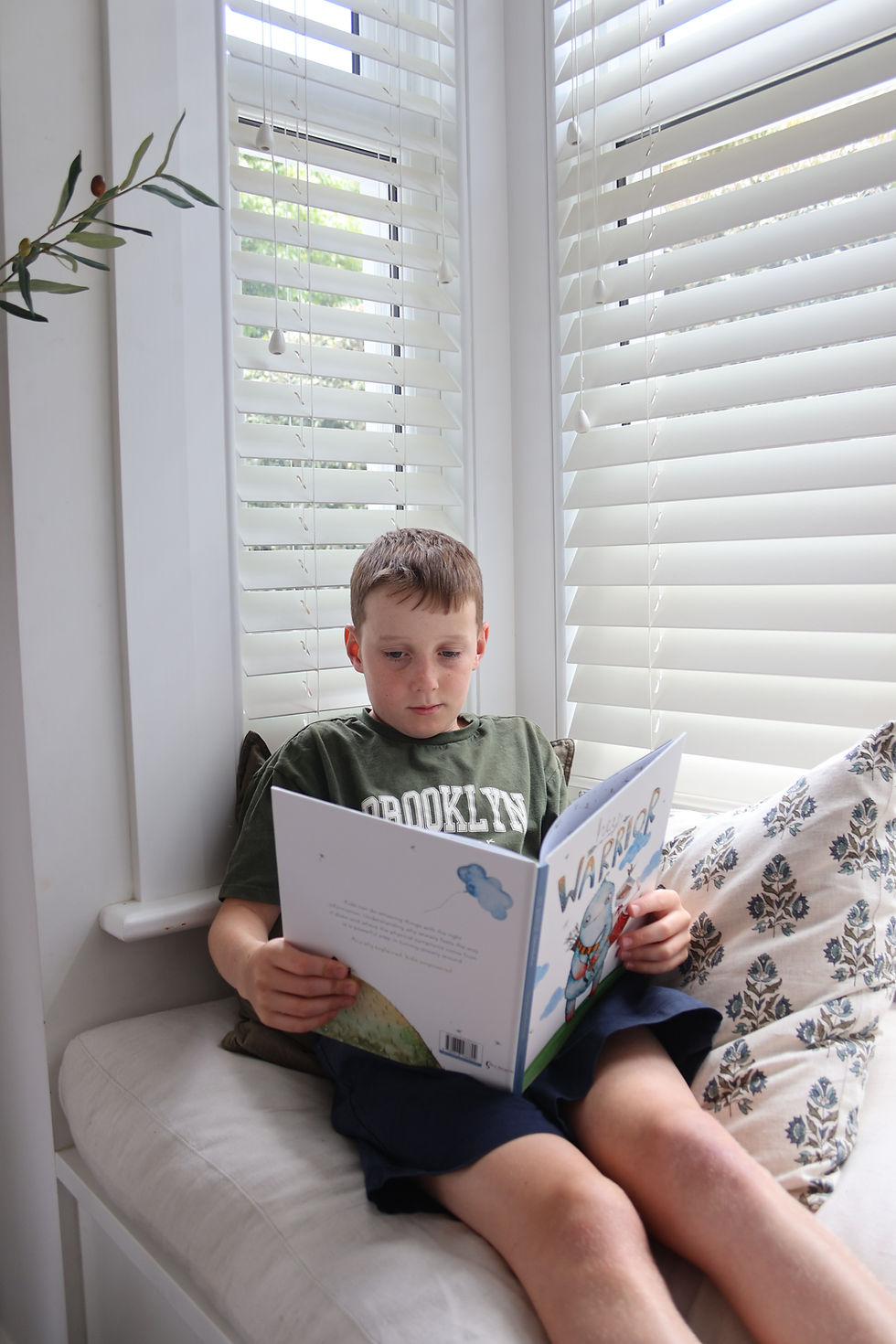
Karen Young’s incredible book Hey Warrior explains this beautifully. Children (and adults!) often experience anxiety as very real physical sensations - a racing heart, wobbly legs, butterflies, shaky hands, or that all‑too‑common sore tummy.
These aren’t made‑up symptoms. They are the body’s natural defence system switching on.
A small but powerful part of the brain called the amygdala is responsible for sensing danger. When it thinks something might be unsafe - even if it’s not - it sends signals through the body to prepare for action. The heart beats faster. Muscles tighten. The stomach flips. All in an attempt to keep us safe.
When children understand that these sensations have names and reasons, everything becomes just a little less scary.
Why anxiety can feel so confusing
The brain doesn’t store memories like a movie - it stores fragments, especially sensory fragments. This means a smell, sound, taste, or texture linked to a stressful moment can trigger an anxious response later on without the child knowing why. For example: A child may have been eating an orange when they heard upsetting news. Months later, simply smelling an orange can send their body into full anxiety mode, even though they consciously feel “fine.”
For many neurodivergent children, sensory information is already heightened. Bright lights, loud noises, busy spaces, scratchy textures, strong smells - all of these can overwhelm the nervous system quickly. Combine that with stored emotional memories, and it’s easy to see how anxiety can build fast.
Identifying your child’s unique triggers is an important step in helping them feel safer and more supported.
So what can we do? Support, understand, name, and regulate.
Anxiety shouldn’t be dismissed - it should be named and reframed as a natural, healthy human emotion. The goal is to help children understand what’s happening in their bodies and learn tools to regulate those big feelings.
Here are some gentle, effective tools backed by research and used by therapists:
1. Slow, deep breathing
One of the most powerful ways to calm anxiety is by slowing the breath. Steady breathing signals to the brain that it is safe, helping the body shift out of “alarm mode.”
But deep breathing is a skill, and it gets easier the more we practice it.
Bubble wands are a playful way to build these skills. To make a bubble, children must take a deep breath in and slowly breathe out. They also naturally shift into mindfulness as they watch the bubbles float and pop.

2. Guided breathing and grounding exercises
Calm‑down cards provide simple, child‑friendly prompts that help little ones learn how to steady their breathing or reconnect with the present moment. Over time, this gives them a sense of control over their minds and bodies.
3. Strengthening helpful thought patterns
Thoughts are powerful. When children practice thinking supportive, brave, or grounding thoughts, it teaches the brain that they are in charge - not their anxiety.
Affirmation cards for anxiety make this easy. They can be placed by the bed, on the wall, in a school bag - gentle reminders of what children are capable of, especially when they need the encouragement most.

The heart of it all
The most important thing when it comes to childhood anxiety is this:
Don’t dismiss it. Name it. Understand it. Support it. Help children tune into what their bodies are telling them, reduce or manage triggers, and practice the tools that bring their nervous system back to safety - like deep breathing and powerful, grounding thoughts.
With understanding, practice, and connection, anxiety becomes something children can face - not something they have to fear.
x Rebecca Iona
(Clinical Registered Creative Arts Therapist)



Comments